European Fixture Travel Burdens: Distance Metrics Altering Team Performance in Cross-Country Football Fixtures
Ulrich Peters · Oct 2, 2026
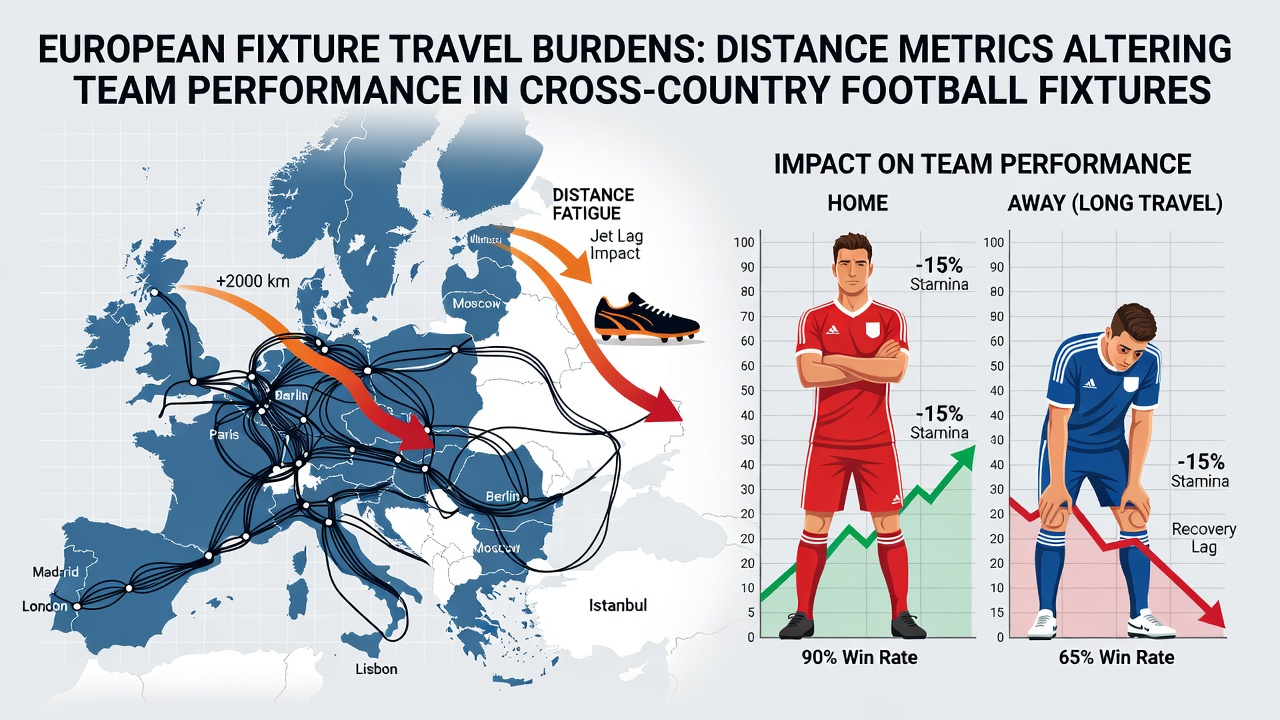
European Fixture Travel Burdens: Distance Metrics Altering Team Performance in Cross-Country Football Fixtures
European club competitions have expanded their geographic reach in recent seasons, which means teams now face longer journeys between domestic and continental matches, and distance metrics have emerged as measurable factors that correlate with shifts in player output during October 2026. Researchers tracking GPS data across multiple leagues have documented how total kilometers traveled, flight durations, and time zone changes influence recovery windows and subsequent match statistics.
Expansion of Cross-Border Schedules
UEFA's club competitions now include more teams from distant regions, so squads based in Portugal or Greece frequently cross the continent within a seven-day window, while clubs from northern Europe travel south for midweek ties. This pattern has intensified since the 2024 format changes, and analysts note that average one-way distances for group-stage participants rose from 850 kilometers in 2022 to over 1,200 kilometers by the start of the 2026-27 campaign.
Distance Metrics and Recovery Data
Performance analysts measure travel burden through several variables including total distance, number of time zones crossed, and hours spent in transit. Studies compiled by sports science departments show that journeys exceeding 1,000 kilometers coincide with measurable drops in high-intensity running, typically 6 to 9 percent lower than home fixtures, while sleep disruption from late arrivals adds another layer of fatigue. Data collected during the 2025-26 season indicated that teams arriving less than 48 hours before kickoff recorded fewer successful passes in the final third compared with those given an extra rest day.
Observed Effects on Match Statistics
League-wide tracking reveals consistent patterns when long-haul trips precede domestic games. Teams returning from eastern fixtures often post reduced expected goals values in the following weekend round, and defensive errors increase as concentration metrics decline. One study tracking Serie A and Bundesliga clubs found that matches following flights longer than four hours produced 0.3 more goals per game on average, largely because away sides struggled to maintain pressing intensity after 70 minutes.
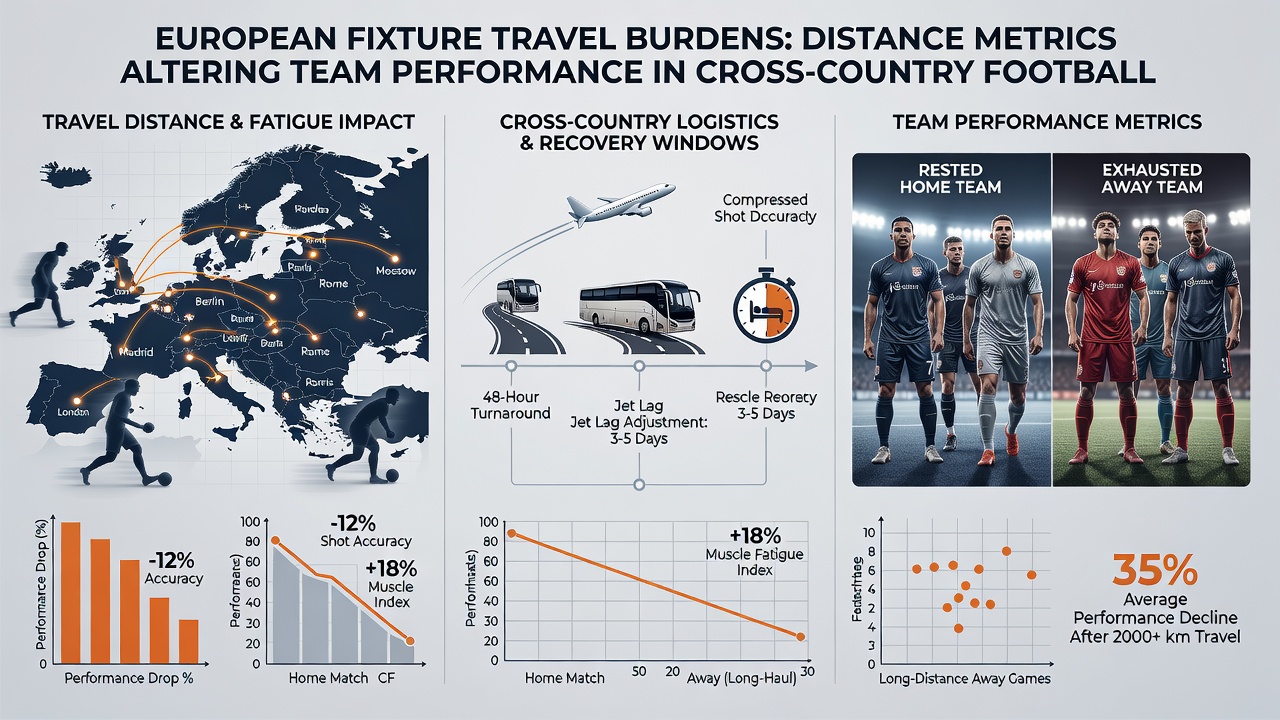
Coaches have adjusted preparation protocols accordingly, incorporating more recovery sessions and adjusted training loads when schedules include back-to-back long trips. Figures from the European Commission sports monitoring program confirm that clubs with dedicated travel analysts have reduced the performance gap between home and away fixtures by roughly 12 percent over three seasons.
Regional Differences Across Competitions
Clubs in the Premier League face shorter average domestic distances yet encounter longer European legs when drawn against eastern or southern opponents, whereas La Liga sides often travel across time zones within Spain itself before adding continental journeys. Researchers at McGill University compared these patterns and noted that Scandinavian teams suffer the largest relative drop in sprint volume after southward flights, while Mediterranean clubs show smaller variances when traveling north. The differences tie directly to baseline climate adaptation and typical flight lengths rather than any single league advantage.
Strategic Adjustments by Clubs
Clubs have responded by chartering earlier flights, using private terminals to shorten ground time, and employing sleep coaches who manage light exposure on aircraft. Some organizations now schedule lighter domestic training weeks immediately after return journeys, and GPS monitoring helps medical staff identify players whose workload metrics fall outside expected ranges. These measures do not eliminate travel effects but allow teams to quantify and partially offset the burden before match day.
Conclusion
Distance metrics now form part of routine pre-match analysis for any club competing across multiple fronts in Europe. As fixture lists grow more demanding, the relationship between kilometers traveled and on-pitch output continues to guide scheduling decisions, recovery planning, and resource allocation at the highest levels of the game.